
I Almost Lost $50,000 Buying Gold from Cameroon — Here’s What I Learned
I Almost Lost $50 000 Buying Gold from Cameroon? Learn the Mining Code, SONAMINES, export, AML and import rules buyers must meet
The offer looked perfect. A seller in Cameroon had gold ready to ship, a price a little below the market, a laboratory certificate, a short video of bars on a table and a very friendly manner. All that was missing was my money. I was one wire transfer away from losing $50,000 when a single phone call changed everything.
Editor’s note: The first-person story in this article is an illustrative composite. It is built from patterns that fraud-prevention agencies and gold buyers commonly report, and it does not describe one real person’s transaction. Names, amounts and details are representative, not factual claims about any individual or company. The lessons, checks and legal and regulatory points are real and apply to anyone buying gold.
If you have searched for “gold buying scam story”, “gold buying scams” or “how to not get scammed buying gold”, this guide is for you. It walks through how a near-$50,000 gold purchase can go wrong, the red flags that were visible the whole time, the checks that stopped the loss and how to buy gold from Cameroon, or anywhere else, without becoming the next victim. It also answers the questions buyers ask most often, including whether buying gold is traceable, why scammers ask for gift cards and whether digital gold is safe.
It is written for jewelry buyers and manufacturers, institutional investors and industrial users. It is general education, not legal or financial advice.
Key Takeaways
- Gold scams rarely look like scams. They look like a friendly seller, plausible paperwork and a small discount.
- The warning signs are consistent: upfront fees, unverifiable certificates, new “escrow” sites and pressure to move fast.
- No legitimate seller, escrow agent or government office asks for payment in gift cards.
- One independent call to the laboratory that supposedly issued a certificate can expose a forgery in minutes.
- Physical gold purchases are usually traceable through banks, dealers, customs and tax records. Keep records and comply.
- Pay only after independent assay, through a letter of credit, licensed escrow or pay-on-assay terms.
The Story: How I Almost Lost $50,000 Buying Gold from Cameroon (Composite Case)
What follows is told in the first person by a fictional buyer, a small jewelry manufacturer, to show how these scams unfold step by step.
The approach
I run a small workshop and wanted to cut costs by buying raw gold directly from the source. I joined a few online groups about African gold and soon had a message from a man who said he represented a mining cooperative in eastern Cameroon. He was polite, answered fast and never pushed. I Almost Lost $50 000 Buying Gold from Cameroon, He offered 400 grams of 24k gold at $125 per gram, which came to exactly $50,000. The market price that week was about $134 per gram, so I was getting roughly 7% off. That felt believable. It was not a crazy bargain, just a nice one.
The proof
Over the next days he sent photos of gold bars, a short video, a scanned mining permit, a copy of a passport and an assay certificate with a laboratory letterhead and an official-looking stamp. Everything matched the story. When I asked whether the permit was real, he sent a second document, a letter on ministry letterhead confirming the cooperative was “authorised for export”.
The fees
Then the small costs began. A $1,800 “sample and permit fee”, described as refundable at closing. I paid it. Two days later, a $4,200 “export tax” that would also be “deducted from the final price”. I paid that too. Each payment felt small compared with the $50,000 total, and each made me more committed. I had already spent $6,000.
The escalation
Next came a “customs hold” that required a “security company” to escort the shipment. The seller said the full $50,000 had to be deposited with an escrow service he recommended, and that another buyer was waiting if I hesitated. The escrow website looked professional, with a logo, a chat window and a tracking page. He asked me to wire the money within 24 hours.
The call that stopped it
That evening I mentioned the deal to my accountant. She asked one question: “Have you spoken to the laboratory yourself?” I had not. The next morning I searched for the laboratory’s real website, found a phone number and called. They had never heard of the report number and said the letterhead was a copy of theirs. I then looked up the escrow website’s registration date. It had been created nine days earlier. A reverse image search showed that the photos of the gold bars appeared on several unrelated pages.
When I confronted the seller, the friendliness vanished. He asked for “just a bit more” to release the shipment, then stopped replying. I lost $6,000 in fees. I kept $50,000. That is how I almost lost $50,000 buying gold from Cameroon, and why I now verify first and pay last.
Expert insight: The most dangerous part of a gold scam is not the final payment. It is the string of small payments before it. Each fee makes you feel invested, which is exactly what the scammer wants. A rule that stops this: no money moves until the seller, the permits and the metal have all been verified independently.
What I Learned: The Red Flags Were There All Along
| What happened | The red flag | What I should have done |
|---|---|---|
| Approach through an online group | Anonymous contact with no verifiable company | Confirm company registration, owners and address first |
| 7% below market price | Real gold is priced from the spot price, so discounts need an explanation | Ask why, and calculate the fair price myself |
| Scanned permit and ministry letter | Documents sent by the seller prove nothing | Confirm with the Ministry of Mines using contact details I found myself |
| Assay certificate with a stamp | Certificates are easily forged | Call the laboratory and run my own independent assay |
| “Refundable” permit and tax fees | Classic advance-fee pattern | Refuse any upfront fee |
| “Customs hold” and “security company” | Manufactured emergencies | Stop, pause and verify with real customs and the real authorities |
| Seller-recommended escrow site | Fake escrow sites are common | Choose a licensed escrow provider myself |
| 24-hour deadline and “another buyer” | Pressure to prevent checks | Treat urgency as a reason to slow down |
For a detailed look at the forged paperwork, see our guide on gold scam red flags in Cameroon, including how to spot fake assay certificates and fake bars.
Gold Buying Scams: The Most Common Types
Searches such as “gold purchase scams”, “gold seller scams” and “scams involving buying gold” cover a range of tricks. Cameroon-linked offers use some of them, but they exist everywhere.
| Scam type | How it works | How to protect yourself |
|---|---|---|
| Advance-fee fraud | Fees for permits, taxes, shipping or “security” before delivery | Never pay fees to a seller. Use escrow or letter of credit |
| Fake or plated bars | Tungsten cores or plated base metal passed off as gold | Independent XRF, ultrasonic and fire assay |
| Forged certificates | Copied lab letterheads and report numbers | Confirm with the issuing lab, test your own sample |
| Fake dealer or escrow websites | New look-alike sites with chat windows and tracking pages | Check domain age, registration and licences |
| Overpriced collectible coins | High-pressure sales of “rare” coins at big premiums over gold value | Compare to spot price, buy from reputable mints and dealers |
| Impersonation | Scammers pose as refiners, customs officers, lawyers or banks | Use contact details you find yourself |
| Gift card, crypto and wire demands | Payment methods that are fast and hard to reverse | Refuse them. Use traceable, protected payment |
| Recovery scams | “Agents” offer to retrieve lost money for a fee | Report to authorities and never pay a recovery fee |
Why do scammers ask for gift cards?
People searching “why do scammer ask for gift cards” are asking one of the most important questions in fraud prevention. Gift cards behave like cash. I Almost Lost $50 000 Buying Gold from Cameroon, they can be emptied within minutes by anyone who has the number and PIN, they cannot easily be traced to a person, and payments are very hard to reverse. That is why scammers love them. The US Federal Trade Commission warns that no legitimate business, government agency or escrow service will demand payment in gift cards. Neither will a real gold seller. The same applies to cryptocurrency, cash and wire transfers to personal or foreign accounts.
Is buying gold coins a scam?
No. Buying gold coins is a legitimate way to own gold, but scams around coins are common. Watch for sellers who push “rare” or “limited edition” coins at premiums far above the metal value, counterfeit coins that copy popular bullion designs, unsolicited calls or ads promising guaranteed returns, and sellers who will not provide a written invoice. Compare any quote with the spot price, check the coin against the mint’s published weight and size specifications and buy from established, mint-authorised dealers.
Is buying gold a scam, according to Reddit?
Many people search “is buying gold a scam Reddit” hoping that community stories will settle the question. Forums are useful for spotting patterns and learning what real buyers experienced. They are not reliable proof. Posts are anonymous, can be staged by sellers or scammers and rarely include verifiable detail. Use them as a source of questions, then check facts with official bodies, laboratories and your own due diligence.
Can you sell fake gold?
Knowingly selling fake gold, or passing off plated or filled items as solid gold, is fraud and a crime in most countries. Legitimate dealers test gold before buying, using XRF, acid and other methods. If you discover that something you hold is not real gold, do not try to sell it as genuine. Contact the seller who sold it to you, your bank or card provider and the relevant consumer or fraud authority.
Is Buying Gold Traceable? Does the Government Know?
Buyers often ask “is buying gold traceable” and “does the government know if I buy gold”. The honest answer is that physical gold is far from anonymous, and you should treat it as a regulated purchase. Details vary by country, but common touchpoints include:
- Banks: wire transfers and card payments leave records, and banks screen large or unusual gold payments for money laundering.
- Dealers: many countries require precious-metal dealers to verify customer identity and report suspicious activity. Large cash transactions can trigger reporting.
- Customs: importing or exporting gold usually requires declarations, and carrying it across borders undeclared can lead to seizure.
- Tax: profits from selling gold may be taxable, and some bullion sales can trigger dealer tax reporting.
- The metal itself: serial numbers, assay certificates and refiner marks create a paper trail from refinery to owner.
That traceability is good news for honest buyers, because documented gold is easier to insure, finance and resell. It is bad news for anyone hoping to avoid records. The anti-money-laundering standards set by the Financial Action Task Force are a major reason. Ask your tax adviser and bank what applies to you, keep every invoice and certificate, and comply with declaration rules.
Is Buying Digital Gold Safe? What About PhonePe and Similar Apps?
Searches such as “is buying digital gold safe” and “is buying gold on PhonePe safe” come mainly from India, where payment apps sell small amounts of “digital gold”. Digital gold is different from buying a bar from a Cameroonian supplier, but the safety question is the same: who actually holds the gold and what protects you?
In November 2025, India’s securities regulator SEBI issued a public caution that digital or e-gold products are not securities and are not regulated as commodity derivatives, so they sit outside its oversight and may expose buyers to counterparty and operational risks, according to published reports. Platforms and their industry partners say each unit is backed by physical gold held through licensed bullion partners, and that digital gold is simply a way to buy physical gold online. Both statements can be true. The practical points are these:
- Digital gold is held by private companies and vault operators. If one fails, the investor protections of securities markets may not apply.
- Buy and sell prices usually differ by a spread, and taxes and charges apply.
- You generally cannot independently verify the vaulted gold.
- Regulated alternatives, such as gold exchange-traded funds and electronic gold receipts, exist and SEBI has pointed investors toward them.
Read the provider’s terms, check who the bullion partner and vault custodian are, and keep amounts proportionate to the risk. For the regulator’s own information, see SEBI and the Business Standard report on the advisory. This is not investment advice. Other countries regulate digital gold differently, so check your own regulator.
Is Buying Gold a Bad Idea?
Whether buying gold is a good or bad idea depends on your goals, and this article does not give investment advice. Some facts help you decide. Gold pays no interest or dividends, its price can swing sharply, physical gold has storage and insurance costs, and buying small quantities often carries high premiums. On the other side, many investors hold gold to diversify, as a store of value over long periods and as protection against some kinds of market stress. Manufacturers buy it because they need it as a material. Speak to a licensed financial adviser about how gold fits your situation, and never let a seller’s urgency or a “guaranteed return” claim decide for you.
How to Buy Gold from Cameroon Without Getting Scammed
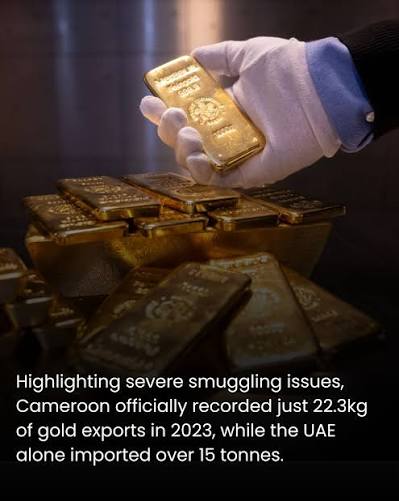
Many buyers ask “how to buy gold from Cameroon”, “how to order gold from Cameroon online” and “buying gold from Africa”. Gold from Cameroon, mostly alluvial and artisanal, is real and can be bought legitimately. But the official picture shows why care is needed: the Extractive Industries Transparency Initiative has documented that Cameroon’s declared gold exports are tiny compared with the amounts that partner countries report importing. Our guides explain the framework in detail: sourcing gold from Cameroon and gold exporters in Cameroon.
A seven-step safe-buying routine
- Calculate the fair price yourself. Take the live spot price, convert to grams, adjust for purity and add a reasonable premium. See our guide on gold for sale in Cameroon for the method.
- Verify the company. Registration, tax standing, owners, address and website age. Use our guide on how to verify a gold supplier in Cameroon.
- Confirm authorisations with the authority. Contact the Ministry of Mines (MINMIDT) using details you found yourself.
- Confirm every certificate with its issuer and commission your own independent assay on a sample you control.
- Screen for sanctions and money-laundering risk, for example against OFAC lists, and trace the gold’s origin using OECD due diligence principles.
- Use a protected payment structure. A letter of credit, licensed escrow you choose, or payment on assay and delivery. Never fees up front, never gift cards, never third-party accounts.
- Use independent inspection and insured shipping. Do not travel to remote sites on a seller’s invitation. The US State Department advisory for Cameroon lists several regions, including parts of the East and Adamawa, at Level 4 (do not travel).
What to Do If You Think You Have Been Scammed
- Stop paying and do not send “one last fee”.
- Contact your bank or card provider immediately. Fast action sometimes allows a wire to be recalled.
- Keep evidence: messages, emails, receipts, phone numbers, website addresses and bank details.
- Report it. In the United States, use ReportFraud.ftc.gov and the FBI Internet Crime Complaint Center. Elsewhere, contact your national fraud authority and local police.
- Beware of recovery scams. Anyone who contacts you offering to get your money back for a fee is likely a second scammer.
- Tell others. Reports help authorities and warn other buyers.
What Different Buyers Should Take Away
Jewelry consumers and manufacturers
Test everything independently, compare quotes with the spot price and keep documentation for each batch. A saving of a few percent is worthless if the metal is wrong or the supplier vanishes.
Institutional investors and central banks
Buy refined bars from accredited refiners with confirmed serial numbers, secure custody and an auditable chain of title. Reserves should never depend on a seller’s paperwork alone.
Technology and industrial manufacturers
Require multi-element assay and batch traceability. A forged certificate can hide contamination that damages production runs and breaches customers’ sourcing policies.
Common Mistakes That Nearly Cost Buyers Their Money
- Paying “small” fees: they create commitment and lead to bigger demands.
- Trusting a polished presentation: logos, stamps and tracking pages are cheap to fake.
- Letting the seller choose the escrow, lab or inspector: choose them yourself.
- Keeping the deal secret: talk to your accountant, bank or lawyer. Outside eyes spot what you miss.
- Acting on a deadline: artificial urgency is a tactic, not a fact.
- Believing a small discount is harmless: a 7% discount can still be the bait.
- Skipping the phone call: one independent call to the laboratory can end a scam in minutes.
Best Practices Before You Pay for Gold
- Write a personal rule: no payment before independent verification of seller, permits and metal.
- Find every contact detail yourself: laboratory, authority, escrow provider, refiner.
- Run a quick set of online checks: domain age, reverse image search, company registration and name searches with words like “complaint” and “fraud”.
- Start small. A trial purchase under protected terms reveals more than any promise.
- Use a written contract, a lawyer and a customs broker for any significant purchase.
- Keep a complete file of messages, documents and payments.
- Pause whenever you feel pressure. A genuine seller will still be there after you verify.
Frequently Asked Questions
How do gold buying scams work?
How do I avoid getting scammed when buying gold?
Why do scammers ask for gift cards?
Is buying gold coins a scam?
Is buying gold a scam, according to Reddit?
Does the government know if I buy gold?
Is buying gold traceable?
Can you sell fake gold?
Is buying digital gold safe?
Is buying gold on PhonePe safe?
Is buying gold a bad idea?
How can I buy gold from Cameroon safely?
What should I do if I paid a gold scammer?
Conclusion: One Call Can Be Worth $50,000
The lesson of the story of how I almost lost $50,000 buying gold from Cameroon is simple. The scam worked right up to the moment someone verified one fact independently. You do not need to be an expert in metallurgy or law. You need a routine: calculate the fair price, verify the company and permits, confirm every certificate with its issuer, test your own sample, choose your own escrow and refuse every upfront fee. Do that and a near-miss never becomes a loss.
If you would rather buy gold with documentation and independent testing built into the process, contact Colomine Mining Corporation (COMINCOR SA). Tell us the form, fineness and volume you need, and ask for our due-diligence documentation before you commit a single dollar.
Sources and further reading: US Federal Trade Commission consumer advice; FBI Internet Crime Complaint Center; Business Standard on SEBI’s digital gold caution; EITI: Cameroon’s gold gap; US State Department Travel Advisory for Cameroon. The case study is an illustrative composite. Laws, advisories and prices change. Check current information before acting.
Leave a Reply