
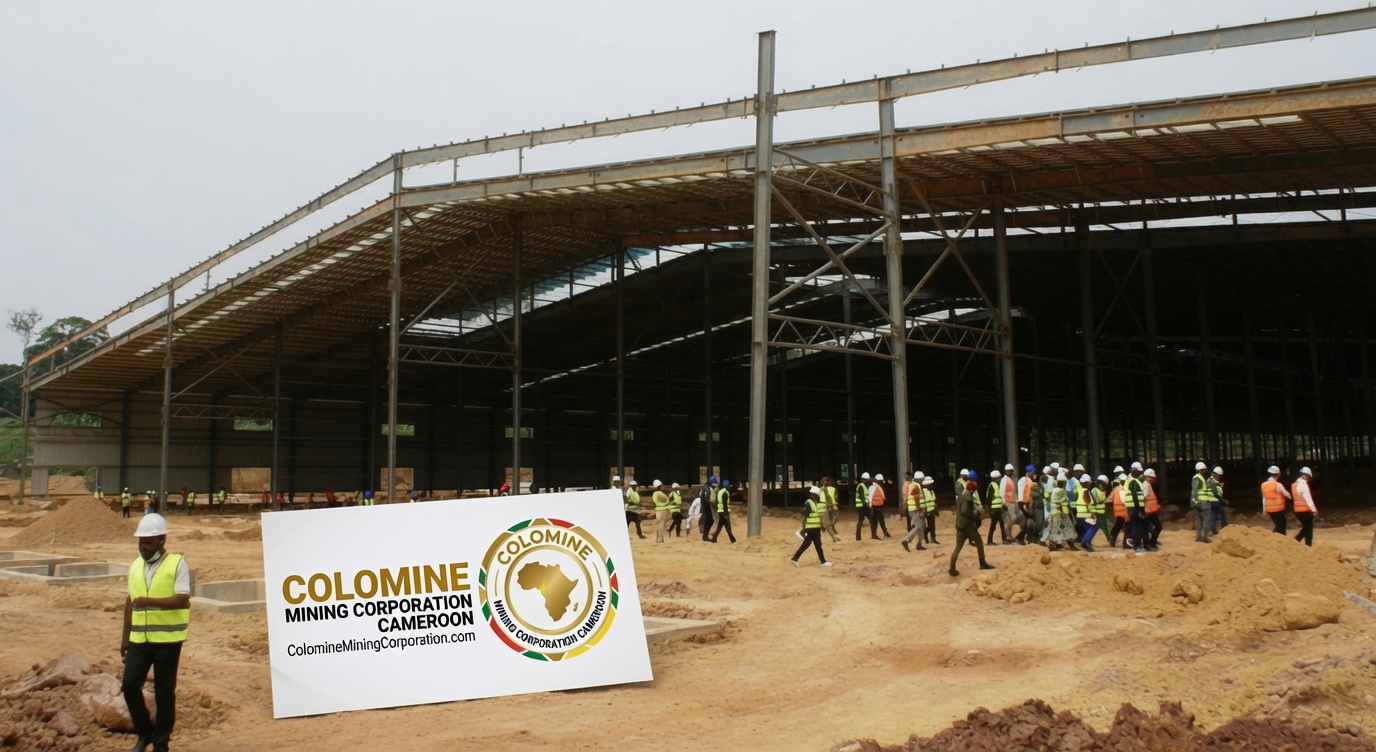
Gold Bars and Nuggets Supplier in Cameroon: The Safe & Legal Guide
Does Cameroon have gold? Yes, and it has been mined there since the 1930s. That is why buyers searching for a gold bars and nuggets supplier in Cameroon keep finding listings, brokers and “special offers”. Some are legitimate. Many are not.
This guide explains where Cameroonian gold comes from, what bars and nuggets really are, how pricing works, who may legally sell and export gold, and how to verify any supplier before you send money. It is written for gold traders, jewelry manufacturers, investors, central bank buyers and industrial users. The 2026 regulatory picture is also covered, because it has changed sharply.
Key Takeaways
- Cameroon has real gold, concentrated in the East region (Batouri, Bétaré-Oya and neighbouring districts).
- Most Cameroonian gold leaves the ground as dust, nuggets and doré. “24k bars” are refined products from accredited refiners, a different thing entirely.
- Price depends on weight, fineness (purity) and the London spot price. It never depends on a seller’s photo or promise.
- Legal supply runs through licensed operators, authorized buyers and exporters, and the state mining company SONAMINES, under the December 2023 Mining Code.
- Never pay before you have verified the licence with the authority, commissioned an independent assay and agreed a written contract.
Is There Gold in Cameroon? Where Is Gold Found?
Gold occurs mainly in southeastern and eastern Cameroon. Research on the Batouri district describes it as part of the Adamawa-Yadé domain of the Pan-African fold belt. Gold there is associated with granitic rocks about 620 million years old. A 2024 study reports that gold production in the Batouri area began in 1934, and that new small-scale pits open almost every year.
Main gold districts
| District | Region | Type of gold |
|---|---|---|
| Batouri | East | Lode gold in sheared granites, plus eluvial and alluvial gold |
| Bétaré-Oya | East | Quartz-sulphide veins along a shear zone, plus alluvial gold |
| Ngoura-Colomine area | East | Artisanal and semi-mechanized workings |
| Adamawa region | Adamawa | Artisanal and exploration-stage occurrences |
Studies of the Bétaré-Oya district describe gold grains alloyed with silver, with core fineness between 859 and 877 and leached rims reaching 958 to 997. This matters commercially. Natural gold from Cameroon is usually not pure, so it must be assayed and usually refined.
Gold Bars vs Gold Nuggets vs Doré: What You Are Actually Buying
The search term “gold bars and nuggets for sale” mixes three different products. Knowing the difference protects you from the most common sales trick: describing doré or dust as “24k bullion”.
| Product | What it is | Typical purity | Who buys it |
|---|---|---|---|
| Gold nuggets | Naturally occurring gold pieces | Varies; gold alloyed with silver and trace metals | Refiners, collectors, jewelers (after assay) |
| Gold dust | Fine alluvial or processed gold particles | Varies; can contain moisture and impurities | Refiners, traders |
| Doré bars | Semi-refined bars poured at or near the mine | Varies widely; must be refined | Refiners, licensed traders |
| Refined gold bars | Bullion from an accredited refiner | Usually 99.5% to 99.99% | Investors, central banks, manufacturers |
Gold nugget composition
A gold nugget is mostly gold alloyed with silver. It often contains small amounts of copper, iron and other metals. Composition differs by deposit, so one nugget can be 85% gold and another 95%. Only an assay tells you the real figure.
What “24k gold bars in Cameroon” really means
24 karat means 99.9% pure or close to it, which in practice means refined bullion with a refiner’s stamp, serial number and assay certificate. Standards such as LBMA Good Delivery apply to accredited refiners. A bar poured by a small operation in the East region is almost always doré, not 24k. Treat any seller who sells “24k bars from the mine” as a red flag until an independent assay proves otherwise.
Quick test: ask who refined the gold. If the answer is “we did it ourselves” or “the mine”, you are buying doré. Price it as doré, on assayed fine gold content.
How Gold Bars and Nuggets Are Priced
Buyers often search for “gold bars in Cameroon price” or “gold nuggets price”, but no honest supplier can quote a final price without knowing three inputs. Prices move daily with the international market, so use a live source and avoid any fixed “list price”.
- Gross weight of the lot, confirmed on a calibrated scale.
- Fineness, the proportion of pure gold, measured by fire assay or an equivalent method.
- The reference price, normally the London spot or fix, adjusted by an agreed discount or premium.
The formula: fine gold content = gross weight × fineness. Value = fine gold content × reference price per gram, minus or plus the agreed margin, minus refining and transport costs where applicable.
Worked example: a 20g gold nugget
Suppose a 20 g nugget assays at 90% fineness. The fine gold content is 20 × 0.90 = 18 g. You multiply 18 g by the day’s reference price per gram, then apply your agreed margin. If a seller quotes you as though all 20 g were pure gold, you are being overcharged by about 10%.
Price warning signs
- A price well below the spot price. Legitimate gold is not sold at a deep discount.
- A fixed per-kilo price that ignores assay results.
- A price that “includes” taxes and export fees without paperwork showing they were paid.
The Legal Framework in 2026
Cameroon’s gold sector is in the middle of a government crackdown. Anyone looking for a gold bars and nuggets supplier in Cameroon needs to understand it, because the rules affect who can lawfully sell to you.
The 2023 Mining Code and permit enforcement
Cameroon adopted a new mining code in December 2023. The Ministry of Mines announced that non-compliant semi-mechanized permits would be withdrawn from 20 February 2026. The ministry also reiterated bans on night work and on artisanal mining inside exploration permit areas.
The shutdown and illegal-operator crackdown
According to ADF Magazine, authorities ordered a halt to gold-mining activity in April 2026 and said about 200 illegal companies had been identified in the East and Adamawa regions, over 95% of them foreign firms. Inspections and equipment seizures followed. A seller who says “we have gold available right now” should be able to show exactly why that gold is lawful.
SONAMINES and the Ministry of Mines
The Ministry of Mines issues permits and regulates the sector, while SONAMINES monitors production, collects the state’s share and supervises marketing of precious minerals from artisanal and semi-mechanized operations. Use the ministry’s official website as your starting point for verification.
Taxes
Government communications on the reforms refer to a 25% synthetic (composite) tax and a 5% export tax, both calculated on actual output. Ask for evidence of payment for every lot.
The smuggling gap
The EITI found that Cameroon recorded 73 kg of gold exports in 2021 while partner countries reported importing about 5.6 tonnes. ADF Magazine reports 22.3 kg officially exported in 2023 against 953 kg of production. The lesson for buyers is simple: undocumented gold is the default risk in this market, so demand proof of lawful origin and export.
Who Can Legally Supply Gold Bars and Nuggets in Cameroon?
| Supplier type | What to verify | Risk |
|---|---|---|
| Mining permit or exploitation title holder | Valid title, compliance with 2023 Mining Code, environmental guarantees | Lower, if current |
| Licensed semi-mechanized or artisanal operator | Permit not withdrawn, SONAMINES reporting, taxes paid | Moderate |
| Authorized gold buyer or exporter | Ministry authorization, company registration, export documents | Moderate |
| State channel (SONAMINES) | Official procedure and documentation | Lowest |
| Broker or “agent” without title | Usually impossible to verify | High |
Step-by-Step: How to Buy Gold Bars or Nuggets from Cameroon Safely
- Define what you need. State the form (nuggets, dust, doré, refined bars), quantity, minimum fineness and delivery terms.
- Collect the seller’s documents. That includes company registration, tax registration, mining or trading authorization, and beneficial-owner identification.
- Verify with the authority. Contact the Ministry of Mines using contact details you found yourself, not ones the seller gave you.
- Run your own KYC and AML checks on the seller and on yourself. Serious suppliers expect it.
- Sign a written contract covering product, assay method, price basis, Incoterms, inspection rights, payment terms and governing law.
- Order a small trial lot first. Test paperwork, assay accuracy and logistics at a size you can afford.
- Use an independent assay. Choose the laboratory yourself. Never accept the seller’s certificate as final.
- Secure export and customs documents, including proof that taxes and levies were paid.
- Pay through traceable banking channels, ideally escrow or documentary credit for larger amounts.
- Keep complete records for your auditors, refiner and regulators.
Documents to Demand Before You Pay
- Certificate of incorporation and tax registration
- Mining title, or authorization to buy, sell or export gold
- Evidence the title is current and was not withdrawn in 2026
- Proof of origin and chain of custody from site to shipment
- Proof of payment of synthetic tax and export levy
- Assay report from a laboratory you can verify
- Export authorization and customs declaration
- Insurance and transport documents
- Identification of authorized signatories
A document promised “after payment” is not a document. Treat it as a stop sign.
Red Flags When Buying Gold in Cameroon
- Prices below the spot price, or “mine-gate” bargains
- Requests for upfront “export”, “clearance” or “release” fees before a contract exists
- Invitations to inspect “samples” abroad for a fee
- Messaging-app-only contact and free email addresses
- Gold bar photos with no serial numbers, refiner stamps or assay data
- Refusal of independent assay or inspection
- Claims of enormous stock available immediately
- Pressure to pay in cash, cryptocurrency or to personal accounts
Warning: a legitimate supplier never asks you to pay a third party a “fee” to unlock a shipment before documents are verified.
Responsible Sourcing and Compliance
Refiners, banks and regulators expect buyers of African gold to run supply-chain due diligence. The main reference is the OECD Due Diligence Guidance for Responsible Supply Chains of Minerals. In practice:
- Map your supply chain back to the producer.
- Assess risks such as smuggling, tax evasion and illegal mining.
- Keep documented controls and a way for others to raise concerns.
- Use third-party audits where volumes justify them.
Mercury is also a concern. The 2024 Batouri research cited above assessed mercury use by artisans in purifying gold. Ask suppliers how they process gold, and whether they use mercury-free methods.
Gold Nugget Buyers, Gold Bar Buyers and Who Is Buying
Gold traders and refiners
These buyers want consistent supply and clean paperwork. Documented origin determines whether a refiner will accept the gold.
Jewelry manufacturers and consumers
Retailers and customers increasingly ask where gold came from. Traceability now affects market access, especially for manufacturers selling internationally.
Investors and central banks
These buyers generally require refined, accredited bullion with full audit trails. Raw doré or nuggets normally go through a refiner first.
Technology and industrial users
Electronics and industrial manufacturers value gold for conductivity and corrosion resistance, and many enforce responsible-sourcing policies on their suppliers.
Gold Bars and Nuggets Supplier in Africa: How Cameroon Compares
Buyers comparing a gold bars and nuggets supplier in Africa will find the same pattern across the continent: real production, tightening regulation and a lot of fraud. Cameroon’s advantage is geological potential and a government now pushing gold into formal channels. Its disadvantage is the scale of informal trade. Whichever country you choose, the verification steps in this guide are the same.
Expert Insights
Buyers rarely lose money on the price per gram. They lose it by paying before verifying, trusting a seller’s assay, and accepting documents they never confirmed with the issuer. Verification costs a fraction of one failed shipment.
Three habits separate safe buyers from victims. They verify licences with the issuing authority directly. They commission their own assay. They treat urgency as a risk signal, never a selling point.
Common Mistakes to Avoid
- Confusing doré with 24k bullion. Insist on assay and refiner details.
- Paying a deposit first. Verify, then pay.
- Trusting PDFs and photos. Confirm every document with its issuer.
- Using the seller’s laboratory. Pick your own.
- Ignoring 2026 enforcement. A permit valid last year may not be valid now.
- Chasing discounts. A deep discount often reflects unpaid tax or illegal origin.
- Skipping the trial lot. Scaling before testing is the costliest shortcut.
Best Practices
- Deal only with sellers who can document title, origin and export.
- Confirm licences directly with the Ministry of Mines.
- Run KYC and AML checks on every counterparty.
- Hire a lawyer experienced in Cameroonian mining and export law.
- Pay by escrow, documentary credit or other traceable methods.
- Insure and track shipments end to end.
- Apply OECD-aligned due diligence and keep records.
- Re-verify permits before every new order.
How to Evaluate Any Supplier, Including Us
These checks apply to every seller. Colomine Mining Corporation (COMINCOR SA) encourages buyers to request our corporate and licence documents, confirm them with the relevant Cameroonian authorities, and begin with a documented trial order. For further reading, see our guides on how to buy gold from Cameroon, gold doré bars for sale in Cameroon and how to verify a gold export licence in Cameroon. A supplier that welcomes verification is a better partner than one that discourages it.
Frequently Asked Questions
1. Does Cameroon have gold?
Yes. Gold has been produced in the East region since the 1930s, with major activity around Batouri and Bétaré-Oya.
2. Where is gold found in Cameroon?
Mainly in the East region, in the Batouri and Bétaré-Oya districts, with further occurrences in Adamawa. It occurs as lode gold in sheared granites and as alluvial and eluvial gold.
3. Is it legal to buy gold bars or nuggets in Cameroon?
Yes, if you buy from authorized sellers and complete the documentation and export formalities. Buying from unlicensed sources risks seizure and prosecution.
4. How much do gold bars cost in Cameroon?
There is no single price. It depends on weight, assayed fineness and the live London reference price, adjusted by an agreed margin. Beware any fixed quote that ignores assay.
5. How is a 20g gold nugget valued?
Multiply weight by assayed fineness to get fine gold content, then by the day’s reference price per gram. A 20 g nugget at 90% fineness holds 18 g of fine gold.
6. What is gold nugget composition?
Mostly gold alloyed with silver, often with small amounts of copper, iron and other metals. Purity differs by deposit and must be measured by assay.
7. Are there real 24k gold bars from Cameroon?
24k bars come from accredited refiners. Gold bars poured at Cameroonian mine sites are normally doré and need refining. Ask for refiner name, serial numbers and an independent assay.
8. Who are the gold buyers in Cameroon?
Authorized buyers and exporters operating under the Ministry of Mines framework, and the state channel through SONAMINES. Confirm status directly with the authorities.
9. How do I spot a gold scam in Cameroon?
Watch for below-market prices, upfront fee demands, refusal of independent assay, unverifiable documents and anonymous contact channels.
10. What is SONAMINES?
Cameroon’s National Mining Corporation. It monitors production, collects the state’s share and supervises the marketing of precious minerals from artisanal and semi-mechanized operations.
11. Can I get a gold supplier’s contact details online safely?
Online contact is a fine starting point but never a basis for payment. Verify the company and its licences offline with the issuing authorities before any transaction.
12. Should I start with a trial order?
Yes. A small, fully documented first lot tests the seller’s paperwork, assay accuracy and logistics before you commit larger sums.
Conclusion: Choose a Cameroon Gold Supplier Who Welcomes Verification
Cameroon offers real gold, but only documented gold is worth buying. Know what you are purchasing, price it on assayed fineness, confirm every licence with the authorities and start small. If you are looking for a gold bars and nuggets supplier in Cameroon, let verification come before price, speed and promises.
Disclaimer: This article is general information, not legal or financial advice. Cameroon’s mining and export rules are changing; confirm current requirements with the Ministry of Mines and qualified counsel before transacting.
Leave a Reply